


My Stepmother Is A Futanari
APK 1.0Let's build community together and explore the coolest world of APK Games/Apps.
Explore a deep, SFW analysis of My Stepmother Is a Futanari APK, focusing on its storytelling, character design, visual style, pacing, and emotional themes.
Information
My Stepmother Is a Futanari APK — A Long-Form, SFW Deep-Dive Review & Analysis
Ever scrolled through the world of indie visual novels and thought, “Wow, some of these titles really go for shock value,” then My Stepmother Is a Futanari is probably already on your radar. But here’s the plot twist: beneath the provocative name and the eyebrow-raising premise, there's actually a surprisingly layered narrative wrapped in the familiar structure of a character-focused visual novel.
And that's where this long-form breakdown comes in. We're not digging into explicit scenes — instead, we’re unpacking the design, the writing style, the mechanical flow, and why games like this keep pulling in curious players from every corner of the internet. So buckle in; this is a full-on 1300-word dive into the game as a piece of interactive storytelling.
A Visual Novel That Knows Exactly What It Is
One thing you’ll notice from the jump is that this game doesn’t pretend to be something it’s not. Its entire structure follows a classic visual novel blueprint: text-based storytelling, frequent dialogue branches, static but expressive character poses, and occasional CG scenes that push major narrative beats.
But what’s interesting is how intentionally narrow the scope is. Instead of throwing in dozens of characters, fantasy worlds, or convoluted background lore, the game focuses almost obsessively on a micro-setting: a household dynamic between the protagonist and the titular stepmother figure. This hyper-contained design gives the narrative a sort of pressure-cooker effect — every small interaction feels amplified, every line of dialogue carries a little more weight, and the atmosphere becomes thick with unspoken tension.
Advertisement
For a game marketed with a boundary-pushing premise, the storytelling technique is surprisingly restrained. It’s less about chaotic shock moments and more about slow-burn interpersonal energy. That’s the design philosophy that separates this game from low-effort adult VNs: it commits to emotional pacing.
A Narrative That Leans on Intimacy Over Spectacle
Strip away the adult framing, and at its core, this VN is about two characters navigating an awkward, forced closeness. Instead of flinging players into wild, fantastical scenarios, almost every scene revolves around mundane domestic encounters — breakfasts, passing each other in the hallway, quiet evening conversations, small misunderstandings that snowball.
This grounded approach does two things:
-
It builds immersion
You can’t help but observe the rhythms of this fictional household, the routine, the little rituals the characters fall into. It’s almost slice-of-life in its structure. -
It builds tension naturally
Because the environment is so ordinary, every moment of emotional intensity hits harder than it should. Even non-explicit interactions feel charged — and the writing knows it.
This is where the game’s writing shines: instead of stuffing paragraphs with purple prose, it plays with silences, pauses, hesitations, half-finished sentences. A lot of visual novels struggle to translate emotional beats into dialogue, but this one handles those subtle "subtext" moments surprisingly well.
Character Design: Static Art With Personality
Even in SFW analysis, we’ve gotta talk about the art direction — because in visual novels, character design is half the experience.
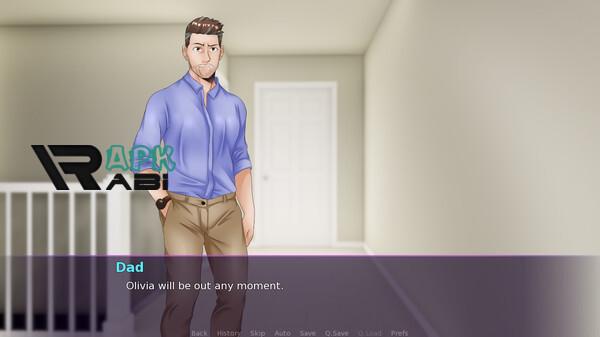
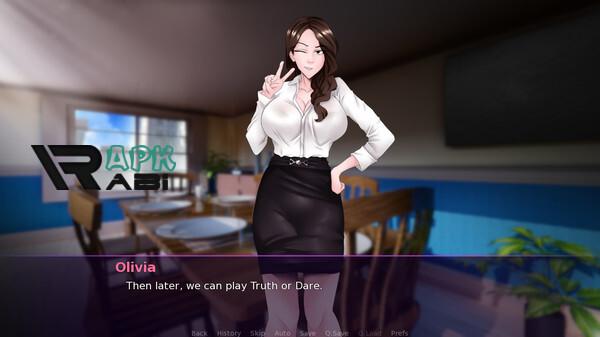
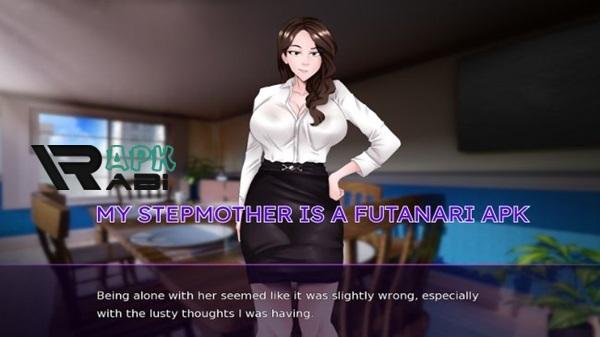
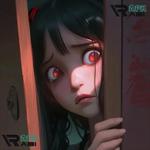
The art style lands somewhere between painterly and stylized anime, with strong linework and soft, diffused lighting. The stepmother character is clearly designed to be eye-catching, but the interesting part is the color theory: warm palettes dominate scenes with her, while cooler tones appear when the protagonist is alone.
It’s a small trick, but it subconsciously shapes the emotional tone of each moment.
The static sprite poses also do more than they need to. Instead of dozens of irrelevant expressions, the art uses a limited set of well-chosen variations that convey just enough emotional nuance. This minimalist approach is actually a strength — VNs overloaded with expressions often feel chaotic, while this one keeps the visual storytelling clean and focused.
Environmental Art: A House That Feels Lived In
The background art also deserves a shoutout.
Unlike many low-budget visual novels that use generic, off-the-shelf backgrounds, this one invests in environments that look intentionally crafted. Rooms have personality — clutter on the kitchen counter, warm evening light casting long shadows, the faint texture on the walls.
These details do two things:
-
They ground the narrative in a recognizable domestic setting.
-
They give scenes a cozy, intimate energy even before the characters speak.
Advertisement
Atmosphere is one of the game’s secret weapons, and the environmental art carries a lot of that load.
Thematic Layering: Identity, Boundaries, and Emotional Friction
Now, this game obviously dips into mature territory, but when you remove explicit content, there’s still a surprising thematic skeleton underneath.
Some recurring themes include:
Identity and Self-Acceptance
Although handled subtly, the game touches on the stepmother character’s identity — not as a spectacle, but as a lived reality. It doesn’t dive into heavy-handed moralizing; instead, the writing frames her identity as an ordinary part of her life that intersects with the protagonist’s world.
Boundaries Within Blended Families
This is the backbone of the narrative. The awkwardness, the uncertainty, the question of how close is too close — the story constantly circles these gray areas.
Power Dynamics
The game doesn’t push this theme aggressively, but the undercurrent is there: age difference, household roles, personal vulnerabilities. The player’s choices occasionally reflect or challenge these power imbalances.
Loneliness and Connection
Many of the protagonist’s internal monologues orbit around isolation, unwanted change, and the desire to be understood — a universal feeling that grounds the more unusual aspects of the setting.
The takeaway? The game isn’t trying to teach deep life lessons, but it uses its characters to explore emotional complexity in ways that go beyond its suggestive branding.
Gameplay Structure: Branching but Not Overcomplicated
Visual novels run on choices, and this one follows the classic formula: dialogue branches, tone choices, optional interactions, and occasional scene variations.
But it avoids the trap of pointless micro-choices. Instead of giving you ten dialogue options that lead to the same outcome, it uses a smaller number of meaningful forks.
These branches tend to do one of three things:
-
Change the emotional tone of a scene
-
Unlock or skip certain interactions
-
Alter the progression toward one of the game’s endings
It’s not a complex branching labyrinth like some high-end VNs, but it’s coherent, clean, and intentional. The developers clearly understood the story they wanted to tell and structured the gameplay around it.
Pacing: Slow-Burn Intimacy With a Steady Rhythm
If you’re expecting a fast-paced, event-driven visual novel, this isn’t that.
This game moves with deliberate slowness.
Scenes often stretch out with internal monologue, quiet moments, or prolonged conversations where not much happens, but the vibe evolves.
Some players love this — the meditative pace, the heavy atmosphere, the feeling of gradually peeling back emotional layers. Others might find it too slow.
But whether you vibe with it or not, the pacing is a choice. And it actually fits the themes of awkward closeness and emerging emotional tension. A rushed story would break the entire mood.
Sound Design & Music Atmosphere
The sound design isn’t flashy, but it’s purposeful.
The ambient tracks lean into soft, looping melodies — the kind that fade into the background but subtly color the emotional tone of each scene. Soft strings during reflective scenes, mellow synth pads during nighttime sequences, understated piano during moments of vulnerability.
This isn’t a soundtrack that screams for attention. It’s more like emotional scaffolding: invisible, but necessary.
Why Games Like This Keep Appearing
Even if you strip the explicit layers away, titles like this stick around because they tap into something players are curious about:
the tension of forbidden closeness, the awkward dance of emotional vulnerability, the exploration of identity within confined spaces.
Visual novels thrive on emotional charge, and this one weaponizes it in a compact, self-contained setting.
It’s niche, but undeniably intentional.
Final Thoughts: A Game That Knows Its Audience but Still Has Craft Behind It
When you peel away the NSFW surface, My Stepmother Is a Futanari stands as a focused, tightly designed visual novel built around emotional tension, atmospheric storytelling, and character-driven pacing.
It’s not groundbreaking, but it’s not low-effort either.
It’s very clear about its structure, its themes, and its tone — and that clarity gives it a sense of narrative cohesion that many niche VNs lack.
Let's build community together and explore the coolest world of APK Games/Apps.





1. This is the safest site on the Internet to download APK. 2. Don't ask about the Play Protect warning, we've explained it well, check here. 3. Do not spam, be polite and careful with your words.